Just down the road…

Just down the road…

July at a Glance: By July, cubs born this year have grown to the size of a raccoon or a small dog with big ears. Yearling bears now on their own can be the size of medium dogs. Bears of both sexes mark trees and adult bears mate. Cubs smell their mother’s breath to learn what’s good to eat. Bears’ great memories help them return to proven food sources.
Bears have more than a hundred times as many smell receptors as people do and can follow scent trails a mile or more back to the source. Because bears are omnivores and much of their diet is vegetation, insects and carrion, their sense of super-smell is vital to their survival.
Bears have a much better sense of direction than most people. They can return year after year to wherever they found food, whether it’s the berry patch that ripens in July or the trash that goes out every Thursday night.
Cubs are big enough now to follow mom as she goes foraging for food. If mom is a wild bear, she teaches them what’s good to eat and how to find and eat specific foods. She shows the youngsters how to eat berries, catch fish and dig for insects. She even lets them smell her breath, so they learn to associate certain smells with foods. Yum, termites!
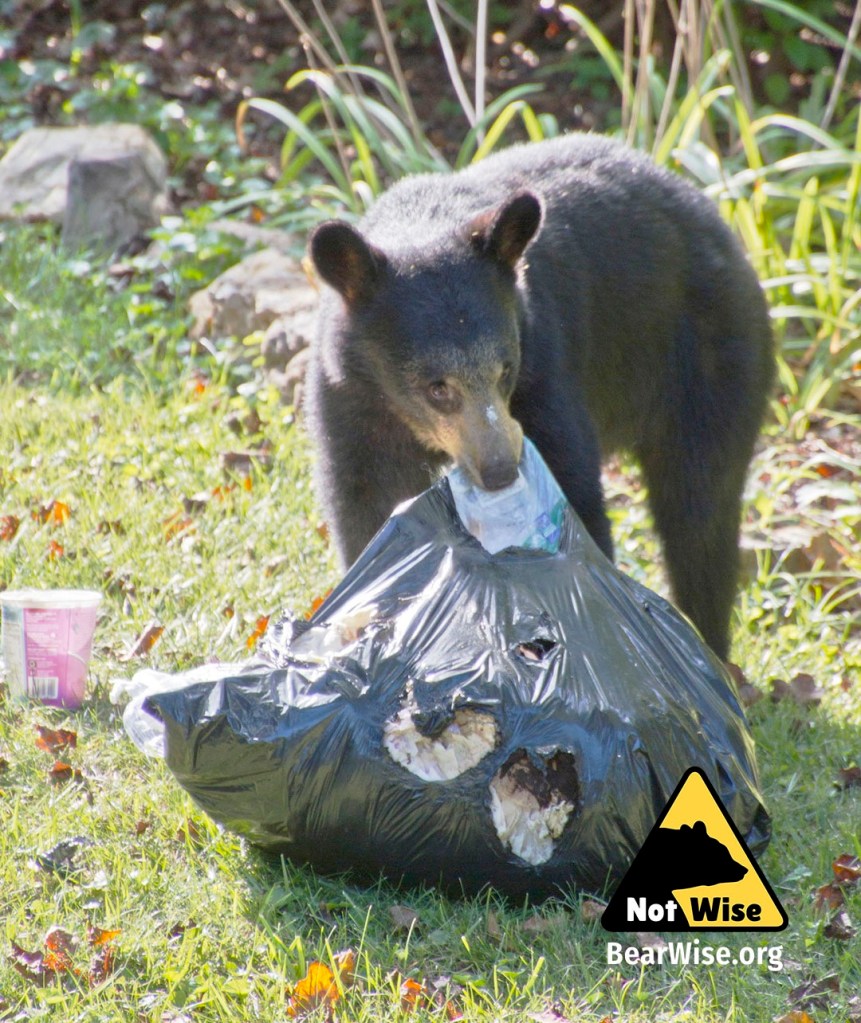
If mom has learned to rely on human food sources, one whiff of mom’s breath will teach the cubs to associate the smells of garbage, pet food, bird seed and more with easy meals. Instead of learning how to forage in the wild, they learn how to raid garbage cans, knock down bird feeders, empty pet food bowls and prowl campgrounds. IF they grow up, they’ll teach their own cubs this same behavior.
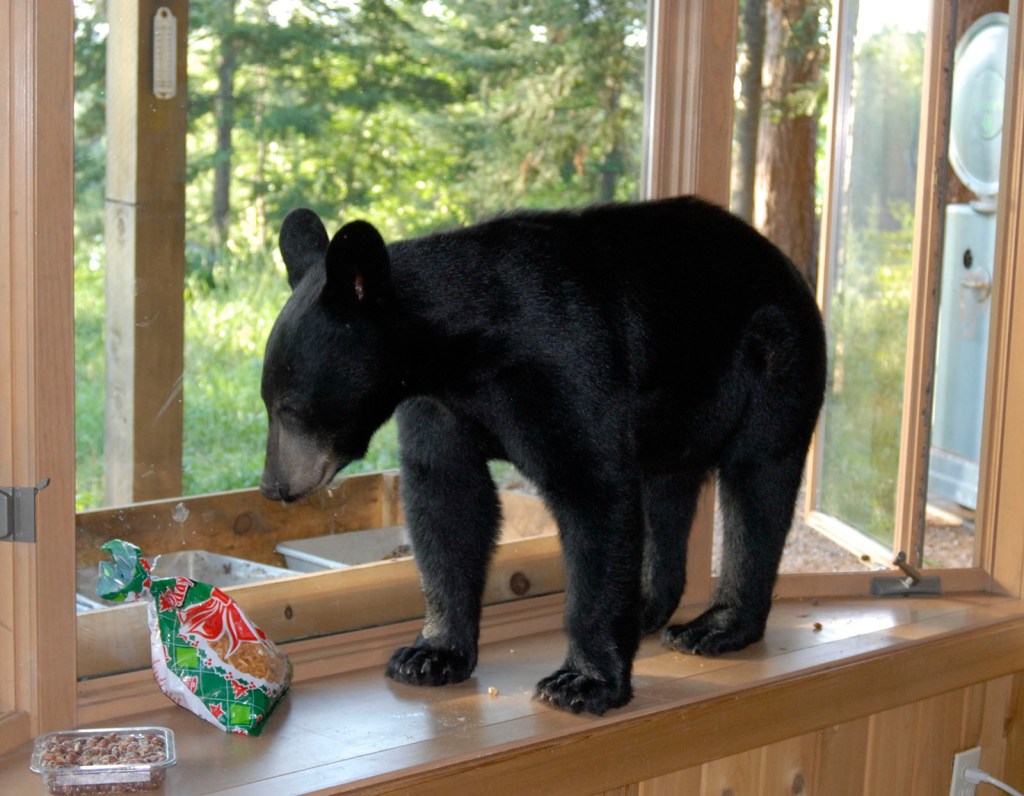
Fun Fact: One way to distinguish yearlings is by their large ears. A yearling bear’s ears are as long as they will ever be, so as the bear gets older and bigger, the ears seem to shrink, but actually the bear’s head is getting larger and wider.
Cubs born this year are usually still with their moms; if they are left alone, they may cry and whimper. Yearlings seldom vocalize, but they do roam around looking for a home range of their own. Female yearlings are often allowed to share their mom’s home range, but males are forced to move out. It may be several years before male yearlings find a permanent home of their own.
Yearlings of both sexes are now trying to find food without their mom’s help. That’s why it’s so important to make sure there’s nothing around your place to attract them. They need to learn to find natural foods if they’re going to grow up wild.
Bears often mark trees, especially in the summer mating season. Bears stand on their hind legs and scratch the trees with their claws and sometimes teeth. Both males and females mark trees. Many researchers believe bears create marker trees to announce they are in the area and let other bears know how big they are. Sometimes males will claw the tree above another male’s markings, as if to say, “I’m bigger than you are.” Bears often deliberately scratch aromatic trees such as conifers, cedars and cherry trees or creosote-soaked poles or structures because the scent created is stronger and carries further than the aroma the bear leaves behind.
Mating often begins in June and goes on throughout July. Mature males may be more active in the daytime now as they travel longer distances throughout their home range. Female bears ready to mate also travel throughout their home range. Bears are very focused on finding mates, so try not to hike alone, pay attention and make noise if you’re out in the woods.
Large male bears chase off younger, smaller rivals but may do battle with other mature males for the right to mate. This is normal mating behavior; both bears may end up with wounds and scars, but even the loser is unlikely to be seriously injured. It’s not safe to approach or interfere. If you are lucky enough to spot two bears that clearly want to be together, just smile and give them some privacy.
Female bears can be ready to mate around age three but may be as old as eight (depending on food availability and conditions). Male bears are also mature at age three but usually must wait longer to mate because the youngsters can’t compete with big mature males.
Bears have more than a hundred times as many smell receptors in their noses as people do and can detect and follow scent trails a mile or more back to the source. Because bears are omnivores and much of their diet is vegetation, insects and carrion (dead animals), their sense of super-smell is vital to their survival.
Bears have a much better sense of direction than most people. Their built-in GPS guides them back year after year to wherever they found food, whether it’s the berry patch that ripens in July or the trash that goes out every Thursday night.
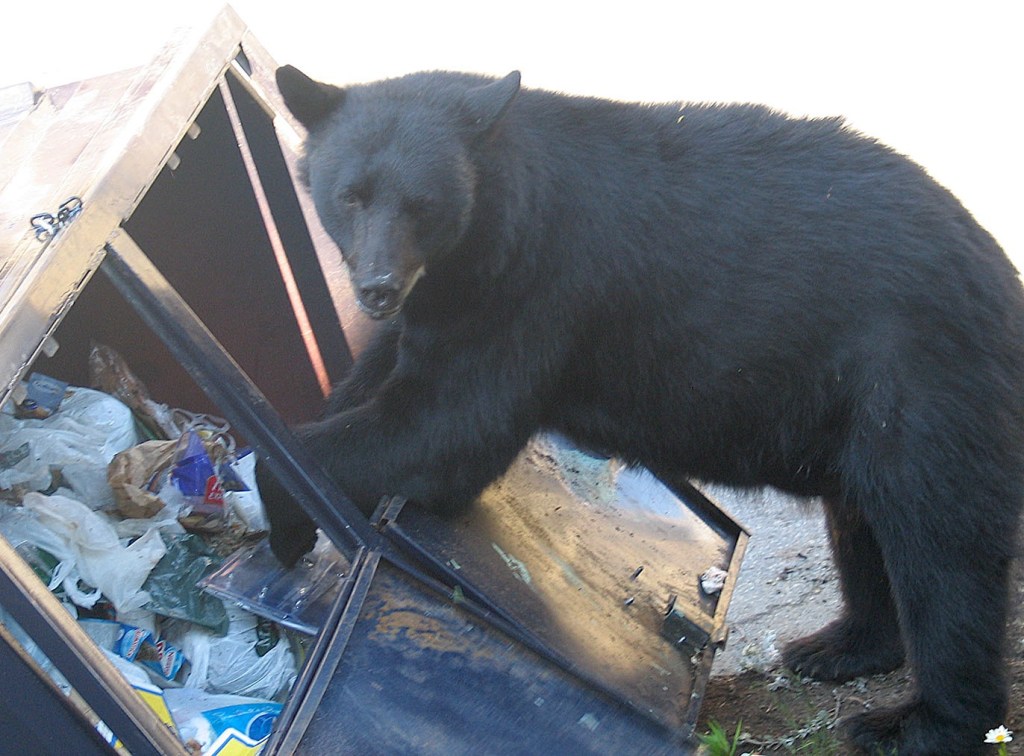
Cubs are big enough now to follow mom as she goes foraging for food. If mom is a wild bear, she teaches them what’s good to eat and how to find and eat specific foods. She shows the youngsters how to eat berries, catch fish and dig for insects. She even lets them smell her breath, so they learn to associate certain smells with foods. Yum, termites!
NOT ALL LESSONS ARE GOOD ONES…
If mom has learned to rely on human-provided food sources, one whiff of mom’s breath will teach the cubs to associate the smells of human food and garbage, pet food, bird seed and more with a full tummy and easy meals. Instead of learning how to forage in the wild, they learn how to raid dumpsters and garbage cans, knock down bird feeders, empty pet food bowls and prowl through campgrounds. IF they grow up, they’ll teach their own cubs this same behavior.
Make it a BearWise Summer. Explore our online resources so you can avoid attracting bears and stay safe at home and outdoors. Thanks for doing your part to keep bears wild.
Courtesy of BearWise®www.BearWise.org







Thank you to our neighbors for decorating our entry gates!
🇺🇸🇺🇸🇺🇸🇺🇸🇺🇸🇺🇸🇺🇸🇺🇸🇺🇸🇺🇸🇺🇸🇺🇸🇺🇸🇺🇸🇺🇸🇺🇸🇺🇸🇺🇸🇺🇸🇺🇸🇺🇸🇺🇸🇺🇸🇺🇸🇺🇸🇺🇸🇺🇸🇺🇸

🇺🇸🇺🇸🇺🇸🇺🇸🇺🇸🇺🇸🇺🇸🇺🇸🇺🇸🇺🇸🇺🇸🇺🇸🇺🇸🇺🇸🇺🇸🇺🇸🇺🇸🇺🇸🇺🇸🇺🇸🇺🇸🇺🇸🇺🇸🇺🇸🇺🇸🇺🇸🇺🇸🇺🇸
Work continues on Beech Tree Drive and Harris Creek Drive today



Yesterday two neighbors reported that a bear has been seen roaming around our neighborhood. Please be cautious when walking in our community.
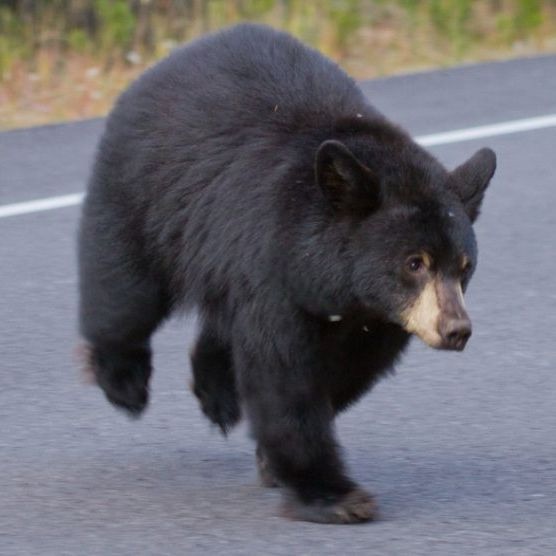
TODAY there have been reports of a bear roaming around our community. Be on the lookout and read this timely article from Bear Wise.
Bears that were born last spring and denned up with mom this past winter are now 18-month old yearlings. If all goes well, they’ll be the size of a medium-sized dog by the end of June, although their fur coats can make them look larger.
Yearling females are often allowed to move in next door to their mom. Yearling males are strongly encouraged to move out and go find a new territory of their own, so most young bears wandering far from home are males.

Like human teenagers, yearlings are at a very impressionable stage of life. If they quickly discover that human places should be avoided, they will learn to support themselves as wild bears. If they find the backyard pickings are easy, they start down a road that is often a dead end.
The best thing you can do to help yearling bears grow up wild is to make sure there’s nothing around your home to attract them.
Female bears that are now empty-nesters as well as mature females that didn’t give birth last winter will soon be ready to mate. Female bears seldom leave their home ranges; for the good of the gene pool, they let the males come find them. A female bear may mate with several different males, and it’s not uncommon for litter-mates to all have different fathers.
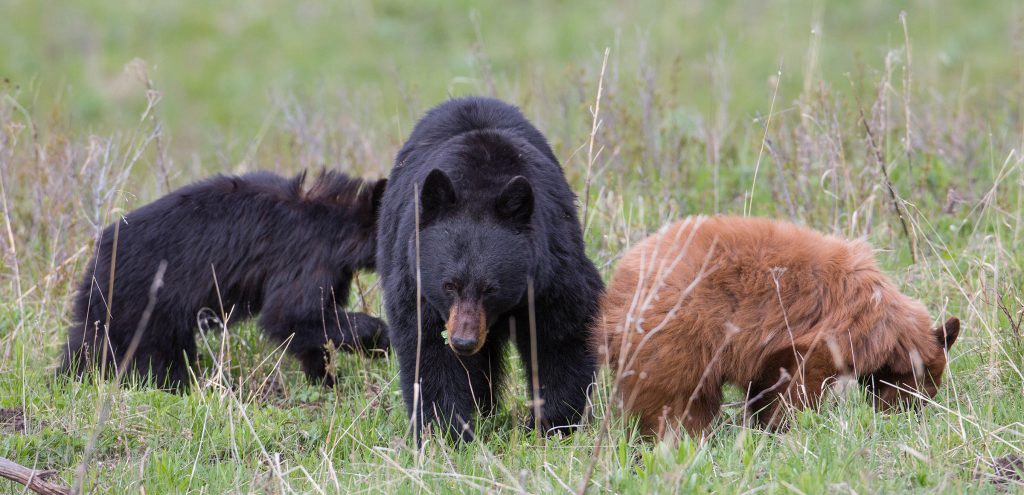
Adult bears have home ranges, not exclusive territories. A home range needs to be large enough to provide food, water, shelter and mates. The size of a home range varies greatly, but a male bear’s home range can be up to 300 square miles, typically five or six times larger than a female’s living in the same general area. Bears share their home ranges with other bears of both sexes, but not at the same time except for a male and female during breeding season or yearlings that are still hanging out with each other.
Moms are still nursing, but cubs are learning how to supplement their diets with more natural bear foods. Cubs take after their moms in several ways: they are super-smart, have a keen sense of smell, learn quickly, have good memories and are very adaptable. So, if mom teaches them to avoid people-places and forage for natural foods, they learn to live wild. But if mom shows them how to raid the garbage or bat down bird feeders or sends them in through the pet door to see what’s in the kitchen, the lessons learned can put their lives in danger.
Natural spring and early summer foods like tender leaves and grasses and developing plants are not as calorie-dense and nutritious as the nuts and fruits that ripen later in the year, so all bears travel further looking for food. Mother bears usually have between one and three hungry, demanding mouths to feed. Moms start traveling further looking for food, and cubs are left home alone for longer stretches of time, usually near the den or underneath a handy “sanctuary tree” they can climb in a few seconds.
Black bears are omnivores; they will eat pretty much anything with calories. The bulk of their spring and early summer diet is what people think of as a salad topped with whatever protein might be available – insects, carrion (dead animals), fish, small mammals, reptiles and amphibians. Nursing mothers need more calories to stay healthy enough to keep producing milk for the cubs and may actually lose weight until more calorie-dense foods become available later in the year and cubs start eating more on their own.
Now you know the reasons bears and people cross paths more often in June. Explore our many resources that will help you avoid attracting bears and stay safe at home and outdoors. Thanks for living BearWise and doing your part to keep bears wild.


Harris Creek Drive and Beech Tree Drive

Harris Creek Drive

Beech Tree Drive
 Tranquility at Carters Lake Owners Association
You must be logged in to post a comment.