


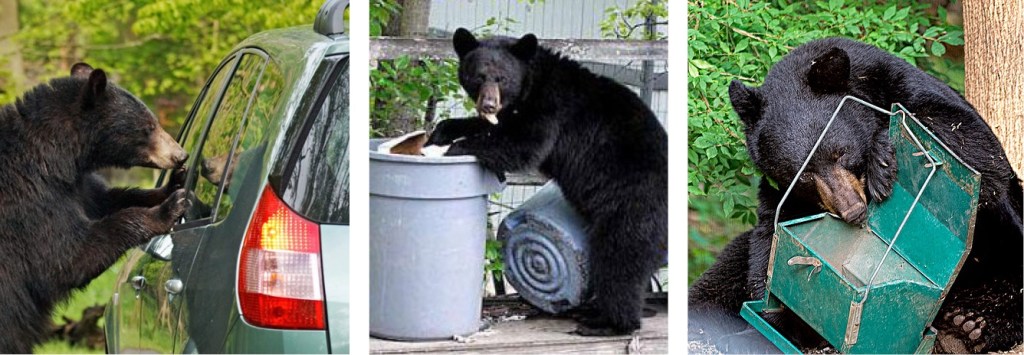
Remember all that stuff you meant to take care of before spring? Bear alarm clocks will be going off soon, so now’s the time to put those plans into action. Here is a quick reminder list of things that could attract bears. Your goal: clean up, lock up and store securely.

Need a better can or a better plan? Check out bear-resistant containers, DIY options and other ways to make sure bears can’t get their paws on your garbage. Learn More >
Bird feeders are carry-out containers for bears.Planting a bird garden or adding a water feature are bear-friendly ways to attract more birds and no bears. Learn more >
Animal feed is tasty, nutritious and a concentrated source of calories. Invest in bear-resistant containers for storing livestock feed, or plan to store it inside a sturdy, locked building. Learn more >
YUM! Smells like dinner five miles away. Here are some tips for keeping your grill or smoker from turning into a carry-out counter for bears. Learn more >
Many bears have learned to open car doors or get in the hard way. It’s time to deep clean vehicles and add a small trash box or bag for easy daily cleanup.
Easy to recognize, easy to open. Time to relocate.
Read more about spring cleaning >
Courtesy of BearWise® | http://www.BearWise.org
Taking small steps, like adding more physical activity to your day, can reduce your risk for heart disease. At least 150 minutes of exercise for adults every week can help keep #OurHearts healthy.
https://nhlbi.nih.gov/resources/move-more-making-physical-activity-routine

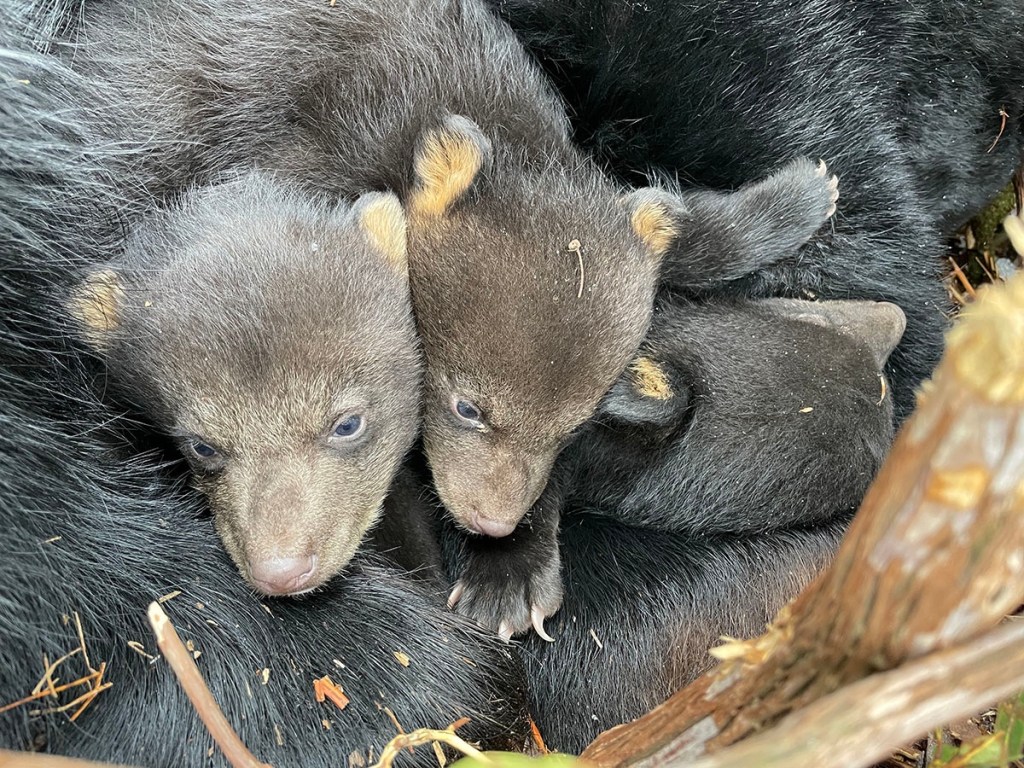
If bears had birthday parties, they’d all be in January and February. That’s when winter dens across the country turn into nurseries as most pregnant bears give birth to cubs weighing in at less than a pound that would easily fit into your hands.
Human moms would probably envy a mother bear’s ability to give birth to one, two or three or more tiny cubs while half-asleep.
Even though cubs are born with their eyes closed, unable to hear or smell and weak and uncoordinated they instinctively find their mom’s nipples and start nursing. Soon the den will be filled with mom’s snores and the happy sounds of cubs humming and purring while they snuggle up to mom and their siblings and fill their tummies with a steady diet of rich, warm milk. Bear’s milk has a fat content around 33%, so nursing cubs have no problem gaining weight.
Over the next several weeks, cubs will keep eating, sleeping and growing and eventually start cautiously exploring their winter quarters. As winter slowly gives way to spring, their eyes will open, their teeth will come in and the fine hair they’re born with will be replaced by fur coats.
To find out how many cubs are usually born, what a very large litter could mean and more fascinating facts, keep reading!


Courtesy of BearWise



 Tranquility at Carters Lake Owners Association
You must be logged in to post a comment.