SEPTEMBER AT A GLANCE:
- Bears enter hyperphagia in September and may look for food up to 20 hours a day.
- Berries, nuts and acorns are important fall bear foods.
- Bears can gain two to three pounds a day.
- Even bears that don’t hibernate eat as if they’re going to.
- Moms-to-be look for a good birthing den and nursery.
Eating Goes Into Hyperdrive
In the cooler days of September, most bears are very focused on finding as much food and gaining as much weight as possible. When the eating is good, a bear can put on two to three pounds a day. By hibernation time many bears will have added about 4 inches of fat and gained between 20% and 50% of their summer body weight.
Biological Clocks Are Ticking
The quest for calories keeps bears active and foraging up to 20 hours a day. This annual feeding frenzy called hyperphagia is driven by bears’ ticking biological clocks counting down to hibernation, when most bears in colder climates retire for the winter and live off the fat they’re working so hard now to accumulate. Bears also need much more water now, up to two to three gallons a day, in order to process all those calories and eliminate nitrogenous waste.
Even Bears that Don’t Hibernate Chow Down
Bears are biologically driven to gain weight in the fall even if they live in warmer climates where many bears don’t really hibernate, just take it easier and nap a lot. Bears that rely on dependable year-round human food sources often don’t hibernate either. But they still eat as if they’re going to.
Fruits and Nuts
September brings a bonanza of nuts (hard mast), including acorns, beechnuts, chestnuts and chinquapins, black walnuts, butternuts, hickory nuts, pecans and pine nuts. There are more than 60 species of oak trees in North America, and every one of them produces edible acorns. Hazelnuts are also a highly prized September mast crop for bears…. but bears are hard pressed to beat the red squirrels to the bounty.
Nesting Bears
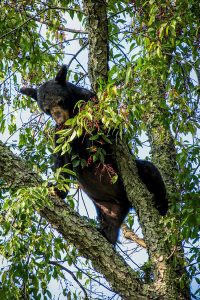
Bears begin climbing into beech trees in early September and make themselves comfortable so they can sit and eat. Bears also “nest” in bur oak trees and eat acorns all day. Bears hate to leave any food behind and will sometimes break branches in their quest for both calories and the perfect perch. These “bear nests” are easy to spot from the ground.
About-To-Be Moms Binge Eat And Den-Hunt
“Almost pregnant” female bears that mated in early summer can gain up to 50% of their weight if the eating is good; the more weight they gain, the better the chances their cubs will thrive. These soon-to-be moms industriously search for the perfect birthing den that will also provide a safe sanctuary in spring and early summer when newborn cubs stick close to home. That’s why they often choose den sites near large “sanctuary trees” that give cubs a place to rest in the shade when mom is out foraging and scoot up if there is danger. In some areas mothers-to-be pick sites near a body of water or a wetland where early spring foods like skunk cabbage grow.
Curious Cubs
Cubs are now independent enough to wander a distance from mom to nose around, play, feed or just check things out, but they stay close enough so they can quickly retreat if they sense danger or feel threatened.
Are You Heading Into The Woods?
Remember that bears are moving about many hours a day, so pay attention to your surroundings, and be a good loser if a bear beats you to your berry patch. Check out our fall hiking tips for more.
Thanks for being BearWise and helping keep bears wild.

 Tranquility at Carters Lake Owners Association
You must be logged in to post a comment.