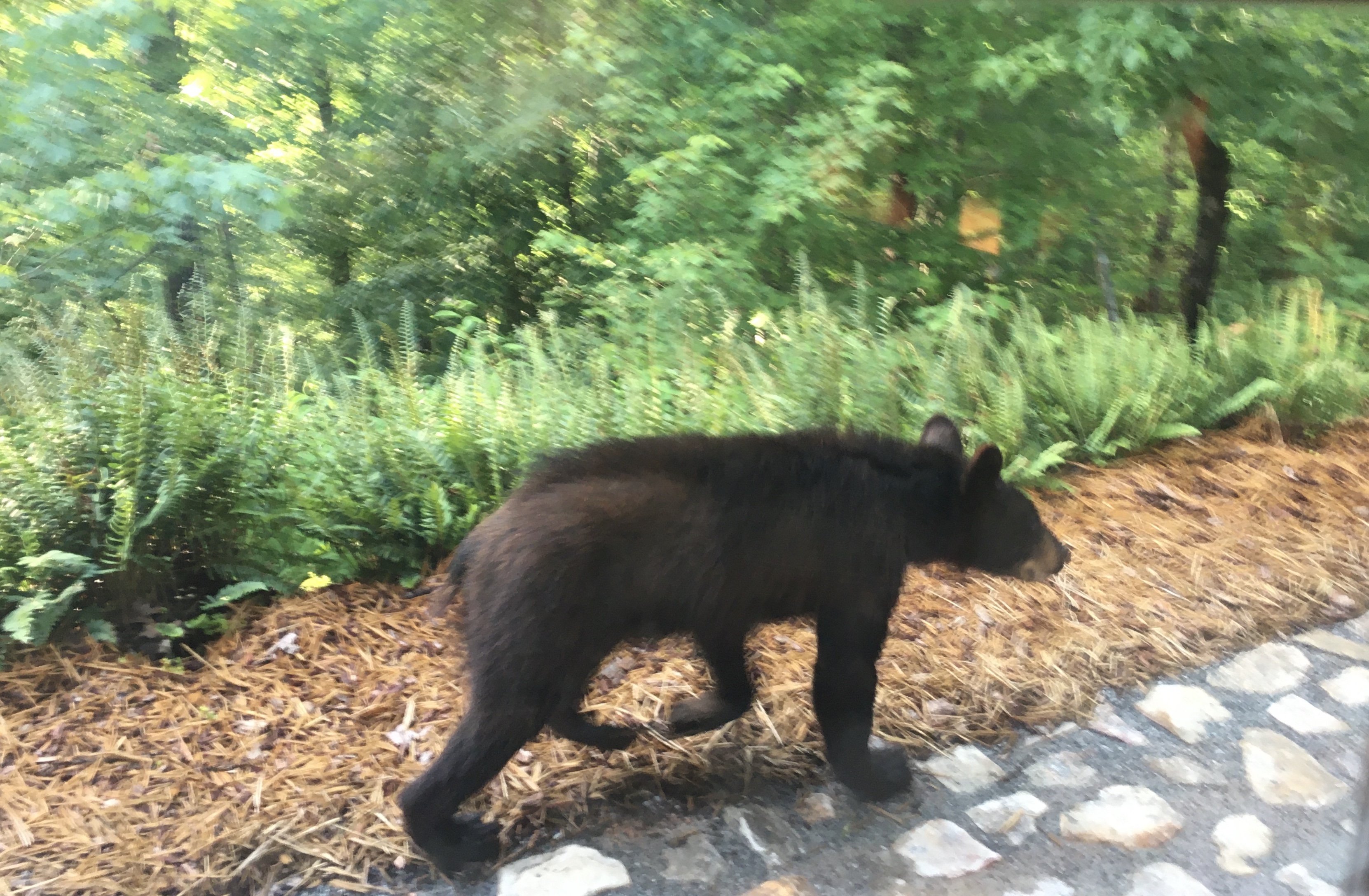
For bears, fall is “last chance to eat a lot” season as they continue to roam about searching for every bit of remaining food, natural and otherwise. Days are getting shorter and nights are getting longer as the countdown to denning up continues.
The combination of shorter days, longer nights and foraging bears also makes fall a prime time for people and bears to encounter each other out in the woods or on the roads.
If your activities take you into the outdoors, keep reading to learn how to prevent encounters with bears.
Outdoor Activities That Can Lead To Bear Encounters:
1. Dogs and bears don’t mix; dogs are involved in the majority of all physical encounters involving people and black bears. Keep your dog on a non-retractable leash no longer than 6 feet at all times. Be extra-alert when walking at dawn, dusk or at night. Don’t let your dog bark at, harass, chase or corner a bear. If your dog gets into a fight with a bear, don’t try to rescue it; you will get injured. Use your bear spray; it works from 30 feet away. Letting your dog off leash in campgrounds or the woods is usually illegal and often dangerous.
2. Drivers travel faster than an ambling bear. While you should always be alert, your chances of colliding with wildlife go up dramatically at dawn, dusk and at night when bears are moving about more and low-light conditions make bears hard to see until it’s too late to stop. So, do yourself, your insurance and bears a favor and slow down and scan the roadside for tell-tale eyeshine. Fall is also a prime time for collisions with deer, moose and elk, which injure more people and wreck more cars than any other type of wildlife encounter.
3. Cyclists and trail runners travel quickly and silently and can easily surprise a bear. A surprised bear can feel threatened and strike out to defend itself from the “threat.” Cyclists and runners should leave ear buds at home, stay alert and periodically make noise, especially on turns and blind curves.
4. Picnickers can arrive at their picnic site with several days’ worth of calories (for a bear) stashed in their baskets, coolers and packs. Enjoy your picnic, but please clean up your table and site before you leave, and don’t leave any food, scraps or trash behind, even “harmless” things like apple cores. Burning this stuff in the fire ring or grill is a big no-no. Bears will come and paw through it and learn that picnic grounds are good places to look for food.
5. Campers often store food and beverages, prepare meals and cook outdoors. Rising smoke and air currents can carry yummy food smells a long way. Bears have been documented following their noses to food from as far as five miles away. All campers should be extra careful to keep a clean camp. Tent campers should cook well away from their tent and make sure anything bears might find attractive is properly stored and secured. The Interagency Grizzly Bear Committee’s list of certified Bear-Resistant Products is a good place to look for containers that keep bears out, even if you’re not in camp.
6. Anglers take all the work out of catching a fish dinner for a bear and are often quietly working streams and lakes where bears are also looking for food. If you’re camping, clean your catch before heading back to camp and throw gut piles out into the water. Then double-bag fish and transport in a cooler; you don’t want a hungry bear following you back to camp. If you’re heading home, it’s better to store your catch on ice and take it home to clean.
7. Hunters are often moving downwind at dusk and dawn when wildlife is most active; a skilled outdoorsperson can do such a good job of moving quietly and staying hidden, they can easily surprise a bear. Gut piles and carcasses smell great to a hungry bear still trying to build up fat reserves. Bears are very inquisitive, and often investigate anything new in their territory. If a bear approaches your hunting stand, yell, wave your hands and make noise so the bear knows you are there and a human to be avoided. If a bear beats you to your kill, don’t engage the bear or attempt to reclaim it. You won’t be going home empty-handed; you’ll have a great story to tell about the one that got away.
Courtesy of BearWise® | www.BearWise.org

 Tranquility at Carters Lake Owners Association
You must be logged in to post a comment.